The zero-based system for biweekly, freelance, tip-based, and gig income that never matches the bills.
Made $4,800, $2,100, then $3,300? The average says plan on $3,400 — and that plan collapses the next $2,100 month. You plan on your worst month. Everything above it becomes fuel.
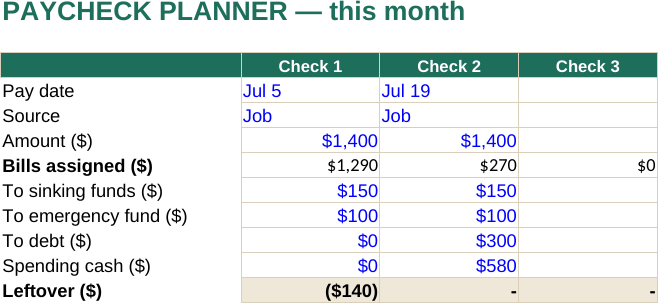
Every bill is assigned to the exact paycheck that pays it — auto-totaled per check. Rent stops colliding with the wrong week.
You plan from your lowest recent month, not the average. A low month is just a low month — mapped, funded, already handled.
Every check ends at $0. Every dollar gets a job — bills, sinking funds, debt, or guilt-free spending. Decided on payday.

Enter a paycheck. The Planner shows the bills it carries, what's left, and where the leftover goes. Decided on payday, not discovered at month-end.
The fast starter sheet — bill-to-paycheck mapping, zero-based leftovers, ~20-minute setup.
Get the Mapper →The full 7-tab dashboard — income smoothing, sinking funds, debt snowball, weekly dashboard.
Get the OS →Secure checkout by Whop · Cards, PayPal & more · Instant delivery
No. The spreadsheets work in Excel and in Google Sheets — upload the file to Google Drive and open it. Blue cells are the ones you edit; everything else calculates itself.
Those budgets assumed a salary. This one budgets per paycheck, plans from your lowest month, and restarts in ten minutes if you fall off for three weeks — abandonment is a designed-for scenario, not a failure.
No — it's a tool for organizing income and expenses. Nothing here is investment, tax, credit, or debt counseling. For decisions about debt or investments, talk to a licensed advisor or nonprofit credit counselor.